
What Is AI Brand Photography? A Complete Guide for Modern Brands
Table of Contents:
What is AI Brand Photography | How AI Brand Photography Works (step-by-step) | Why AI Brand Photography Is a Game-Changer | Can You DIY Your AI Brand Photography? | Is DIY AI Photography Worth Your Time? | AI Brand Photography vs. Traditional Photography | What AI Brand Photography Is (and Isn’t) | Who Is AI Brand Photography Right For? | Is AI Brand Photography Here to Stay? | How to Get Started With a Creative Director
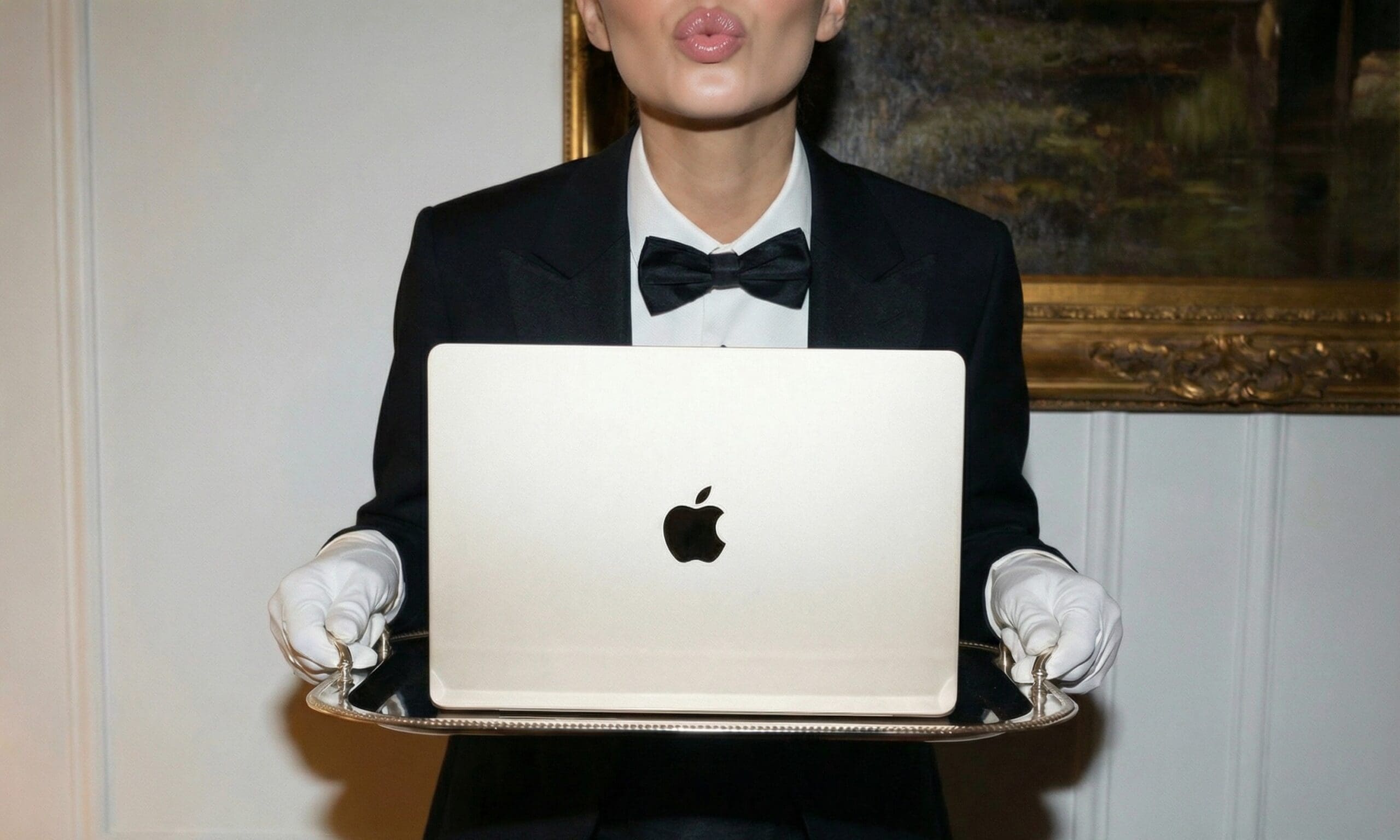
The AI Photography Revolution Has Arrived
AI brand photography is changing what it means to look like a luxury brand, and who gets to. In a world where a potential customer scrolls past hundreds of images every single day, your visual identity is not just important. It is everything. As a result, the brands that capture attention, hold it, and convert it into loyal customers are the ones that look the part: polished, intentional, and undeniably premium.
For decades, achieving that level of visual excellence meant one thing: a full photoshoot production. A traditional brand campaign often requires one to two photographers, a creative director, location rental, model casting, hair and makeup, wardrobe, equipment, licensing, and post-production. And a bill that could easily run anywhere from $10,000 to $50,000 for a single campaign.
That was the price of looking like a luxury brand. And for small and mid-size businesses, it was often simply out of reach.
This guide breaks down everything you need to know about AI brand photography: what it is, how it works, why it matters, what the real tradeoffs are, and how to decide if it is right for your brand.
What Is AI Brand Photography?
AI brand photography is the process of creating professional, on-brand visual content using artificial intelligence tools, guided and directed by a trained creative professional, rather than through a traditional photo shoot production.
It is not a filter. It is not a stock photo library. And it is not simply pressing a button and getting a perfect image.
At its best, AI brand photography is the intersection of creative strategy and cutting-edge technology. The result is a cohesive, high-resolution library of brand imagery including lifestyle visuals, campaign assets, and social content. Ultimately, it delivers high-end imagery that exceeds what a traditional shoot produces, without the heavy post-production burden, at a fraction of the cost and in a fraction of the time.
The keyword here is cohesive. Anyone can generate a single AI image. However, a brand campaign is built on a collection of images that work together to tell a consistent story. Creating a campaign of 10 or more visuals that feels unified, on-brand, and strategically aligned with your brand identity requires creative direction and expertise. The goal is not just beautiful images, but a cohesive visual experience that strengthens your brand across every touchpoint.
How AI Brand Photography Works (Step-by-Step)
The process begins with strategy, not software.
A skilled creative director starts by deeply understanding your brand: your visual identity, your target audience, your brand voice, your competitive landscape, and the story you are trying to tell. This is the same discovery process that happens before any traditional shoot. The difference is what comes next.
Instead of booking a photographer, scouting a location, casting a model, and coordinating a full production team, the creative director uses AI tools to generate and refine imagery that brings that brand vision to life.
The workflow typically looks something like this:
1. Brand Discovery and Creative Direction
Before a single image is generated, there is a thorough creative brief. What is the mood? The color palette? The setting? Who is the aspirational customer in the imagery? What does this brand feel like at its best? These are the questions a creative director answers before touching any tool.
2. Concept Development
The creative director develops concepts, essentially a visual roadmap for the campaign. This might include mood board references, lighting direction, scene compositions, Pinterest inspiration, and image sequencing to tell a cohesive story across multiple assets.
3. AI Image Generation and Refinement
Using professional-grade AI tools, the creative director generates imagery based on the creative brief. This is highly iterative. Dozens of variations are produced, tested, and refined to achieve the exact look, feel, and quality standard the brand requires. Achieving truly cohesive, 4K-resolution images that work together as a set takes significant expertise and time.
4. Post-Production and Retouching
Like any professional photography, the images go through a post-production process: color grading, retouching, resizing, and optimization for different platforms and use cases.
5. Delivery
The brand receives a complete library of ready-to-use, high-resolution visual assets, including social media content, website imagery, and campaign visuals.
Why AI Brand Photography Is a Game-Changer for Modern Brands
AI brand photography is not just a trend. It is a fundamental shift in how brands of every size can access world-class visual content. Here is why it matters.
1. The Cost Gap Is Gone
The most significant barrier to premium brand photography has always been cost. A traditional brand campaign with a photographer, creative director, location rental, model casting, hair and makeup, wardrobe, equipment, licensing, and post-production routinely costs between $10,000 and $50,000. For established brands with large marketing budgets, that is a line item. For small businesses, startups, and emerging brands, that is often out of reach.
AI brand photography eliminates that gap. Small brands can now produce imagery that looks every bit as elevated, intentional, and luxurious as the campaigns coming out of major brand studios. The playing field has been leveled in a way that was simply not possible five years ago.
2. The Logistical Nightmare Is Over
Traditional photography is not just expensive. It is complicated. Consider everything that has to come together for a single shoot day:
Finding and booking a photographer often involves a waitlist of weeks or months. Scouting and renting a premium location. Casting the right model for your brand. Booking hair and makeup artists. Styling wardrobe and props. Coordinating travel and equipment logistics. Managing weather, availability, and shoot-day variables. Then weeks of post-production editing before you see a single final image.
Every one of those moving pieces is a potential point of failure. A model cancels. The location falls through. The weather does not cooperate. The shoot day runs over. The edited images come back and do not feel right.
With AI brand photography, those logistical nightmares simply do not exist. There are no waitlists, no location rentals, no shoot-day coordination, and no weather delays. The creative process is streamlined, controlled, and efficient without sacrificing quality.
3. Speed to Market
In a fast-moving content landscape, the ability to produce fresh brand imagery quickly is a competitive advantage. Traditional shoots take weeks to months, from concept to delivery. AI brand photography can dramatically compress that timeline, allowing brands to respond to trends, seasons, and campaign moments with agility that was previously impossible.
4. Consistency Across Campaigns
One of the most underappreciated benefits of AI brand photography is consistency. A traditional shoot captures a moment in time: a specific day, with specific lighting, a specific model, a specific set. Recreating that exact look six months later for a new campaign is difficult and expensive.
AI brand photography allows a brand’s visual identity to remain consistent across months and years of content, because the creative parameters can be replicated, refined, and evolved systematically rather than rebuilt from scratch each time.
Can You DIY Your AI Brand Photography?
This is a fair question, and the honest answer is: technically, yes. But practically, it is far more complicated than it appears.
AI image generation tools are increasingly accessible. Anyone with a subscription can start generating images today. And there is absolutely a DIY path for brands that want to explore this space. Here is what that path actually looks like.
The Real Cost of DIY AI Brand Photography
The cost of the tools themselves is relatively modest. But getting professional results, meaning a cohesive set of high-quality, on-brand images that look polished enough to represent your business, requires a level of skill and knowledge that takes significant time to develop.
Learning the tools. Generating generic images is one thing. Generating images that match your brand’s specific aesthetic, maintain visual consistency across a set, and meet professional quality standards is an entirely different skill. Most people who attempt this seriously end up spending a week or more working through training courses, and that is before they begin producing anything usable.
Developing prompt expertise. The difference between a mediocre AI image and a stunning one often comes down to how the image is prompted. Prompt engineering for brand photography is a craft. Understanding lighting descriptors, compositional language, style references, and quality parameters takes time to learn and is longer to master.
Achieving cohesion across a set. This is where most DIY attempts fall short. Generating one beautiful image is achievable. Generating eight, twelve, or twenty images that feel like they belong to the same brand world, with the same lighting quality, tonal palette, and aesthetic sensibility, is exponentially harder. Without deep experience, AI-generated image sets often feel disconnected, inconsistent, or off-brand in ways that are hard to pinpoint but immediately felt by anyone looking at them.
Reaching true 4K quality. Professional brand imagery demands high resolution, especially for print, large-format digital, and website use. Producing 4K-quality images that hold up across use cases requires specific technical knowledge that goes well beyond basic tool usage.
Post-production. Even the best AI-generated images typically require professional post-production, including color grading, compositing, and retouching, to reach the quality standard expected of premium brand content.
Is DIY AI Brand Photography Worth Your Time?
Here is the most important consideration: your time is not free.
As a business owner or marketing professional, every hour you spend learning AI tools and generating images is an hour you are not spending on your business, on sales, on strategy, on customer relationships, on operations. The opportunity cost is real, even if it does not show up on an invoice.
At a minimum, you are looking at two or more weeks of trial and error watching tutorials, testing prompts, and refining outputs before you even begin getting consistent, usable results for a cohesive brand campaign. And that is not including the creative direction required for effective brand storytelling.
Ultimately, this is the same reason most businesses hire accountants instead of doing their own taxes, and lawyers instead of writing their own contracts. The tools are technically accessible to anyone. The expertise to use them well, efficiently, strategically, and at a professional standard, is not.
AI Brand Photography vs. Traditional Photography: A Real Comparison
| Logistics | Traditional Photography | AI Brand Photography |
|---|---|---|
| Cost | $10,000 to $50,000+ per campaign | Significantly lower |
| Timeline | Weeks to months | Days to weeks |
| Logistics | Photographer, model, location, HMU, wardrobe, travel | Streamlined, no shoot-day coordination |
| Consistency | Difficult to replicate across campaigns | Highly consistent and scalable |
| Flexibility | Limited by shoot-day constraints | Highly flexible and iterative |
| Quality | Very high (in the right hands) | Very high (in the right hands) |
Both approaches can produce stunning results. The difference is accessibility, speed, cost, and logistical simplicity, all of which favor AI brand photography, particularly for brands that do not have large production budgets.
What AI Brand Photography Is (and Isn’t)
Because this is still a relatively new space, there are real misconceptions worth addressing.
It is not low-quality. When executed by an experienced creative director, AI brand photography produces imagery that is indistinguishable from, and often superior to, traditional photography in terms of resolution, composition, and aesthetic quality.
It is not generic. Stock photography is generic. AI brand photography is custom-directed to your specific brand identity, story, and audience. The difference in impact is enormous.
It is not simply pressing a button. There is genuine creative and technical expertise behind every professional AI brand photography campaign. The tools are a means, not the method. The method is creative direction.
It is not replacing photographers. AI is a tool. Just as digital cameras did not eliminate photographers, AI tools do not eliminate the need for creative vision, strategic direction, and aesthetic expertise. They change the production process, not the creative intelligence that drives it.
It is not the right solution for every photography need. It is worth being direct here: AI brand photography is purpose-built for campaign-level imagery, not high-volume SKU photography. If your brand needs hundreds of individual product shots against a clean background, a traditional lightbox setup with a photographer is still the more practical and cost-effective route. Where AI brand photography truly shines is in the aspirational lifestyle imagery, seasonal campaigns, new launch visuals, and brand storytelling content that surrounds your products and creates the desire to buy them.
Who Is AI Brand Photography Right For?
AI brand photography is an excellent fit for:
Small businesses and startups that need premium brand imagery but cannot justify a $10,000+ production budget. For the first time, truly world-class visual content is financially accessible to brands at every stage.
E-commerce brands planning seasonal campaigns, new product launches, or brand refresh moments. The campaign imagery that drives traffic, builds brand equity, and converts browsers into buyers is exactly where AI brand photography delivers.
Personal brands and solopreneurs who need a cohesive, elevated visual identity across their website, social media, and marketing materials without the complexity of a full production. If you are the face of your brand, AI works best as a complement to your real photos, not a replacement for them.
Mid-size brands that need to stay visually active between major shoots. AI brand photography fills the gap with campaign assets, seasonal content, and social imagery that keep your brand looking fresh without spinning up a full production every time.
Brands in rapid growth phases where speed and budget efficiency are non-negotiable. AI brand photography removes the bottlenecks of traditional production so your visuals can keep pace with your momentum.
Is AI Brand Photography Here to Stay?
AI brand photography is not a shortcut. It is not a compromise. And it is not a trend that will fade.
It is a fundamental evolution in how brands create and own their visual identity, one that makes premium, cohesive, campaign-quality imagery accessible to businesses that previously could not afford it, and more efficient for the brands that could.
The brands that recognize this shift early and invest in it strategically will have a significant visual advantage over competitors who are still booking six-month photography waitlists and spending $10,000 $50,000 on one brand campaign.
Your brand deserves to look like the brand you are building it to be. AI brand photography makes that possible, right now, at a fraction of the traditional cost.
The question is not whether AI brand photography is the future. It already is. The question is whether your brand is ready to lead with it.
How to Get Started With a Creative Director
If you are ready to explore what AI brand photography could do for your brand, the best starting point is a conversation with a creative director who specializes in this space.
The process begins with a deep understanding of your brand before a single image is created. A connection call is the ideal way to explore your brand’s visual identity, your goals, and what a custom AI brand photography campaign would look like for you specifically.
Where creative direction begins →
And if you want to explore the full range of services, from website design to AI brand campaign offerings and partnerships, you can view all services here: presleyandpoppy.com→
